👤 Role
UX/UI Designer (solo)
🤝 Contribution
End-to-end product design
👥 Team
1 UX/UI, 2 devs
💻 Platform
Web (responsive)
⏳ Timeline
2026
🟢 Status
Design complete, in dev
A car marketplace focused on search and filtering, helping people narrow down thousands of listings to the few cars actually worth a closer look.
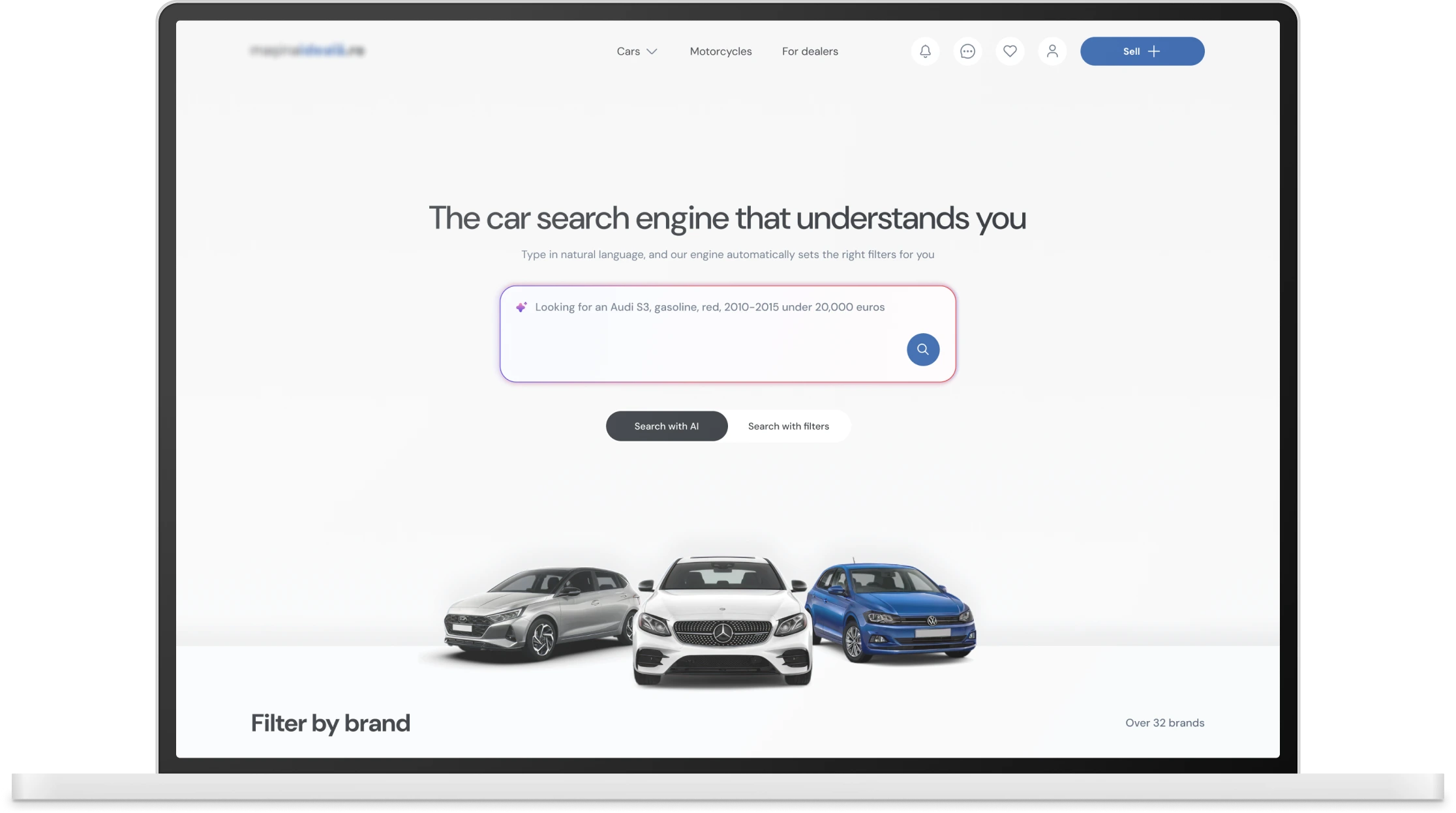
Marketplace Auto is a Romanian car marketplace designed for two very different people: someone who knows what they want and just needs to find it, and someone selling a car who shouldn't need 30+ mins and 2 browser tabs to post a listing.
"Marketplace Auto" is not the platform's real name. For confidentiality reasons, the actual name, along with certain flows and details, can't be shared until the platform is live.
👤 Role
UX/UI Designer (solo)
🤝 Contribution
End-to-end product design
👥 Team
1 UX/UI, 2 devs
💻 Platform
Web (responsive)
⏳ Timeline
2026
🟢 Status
Design complete, in dev
The client wanted to enter a market dominated by one player. The brief was clear: don't just copy what exists, find what's broken and fix it. Two user groups, two completely different jobs to do, same platform.
For buyers:
filters that go deep enough to actually narrow things down, and a way to search without knowing what filters to set.
For sellers:
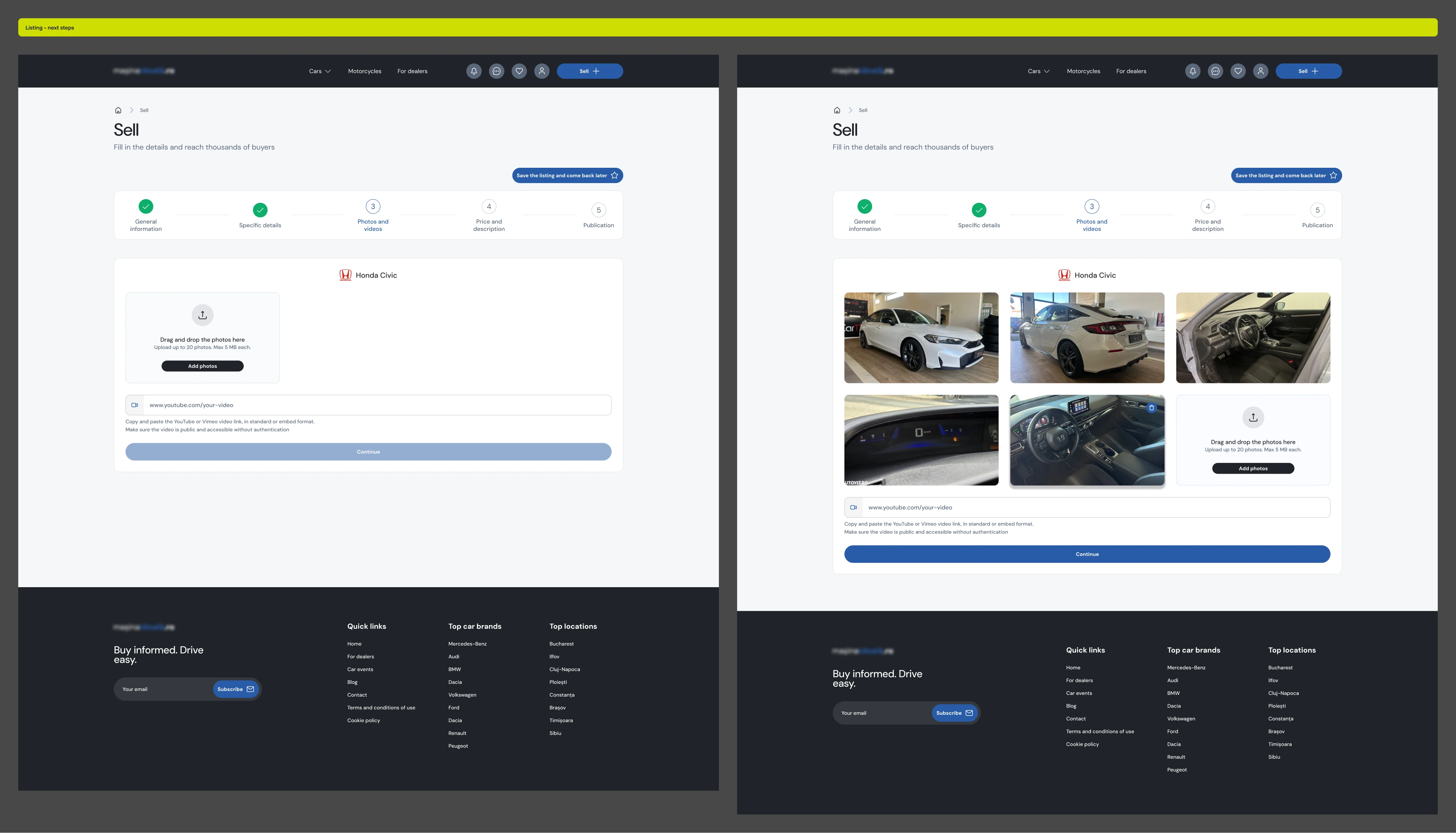
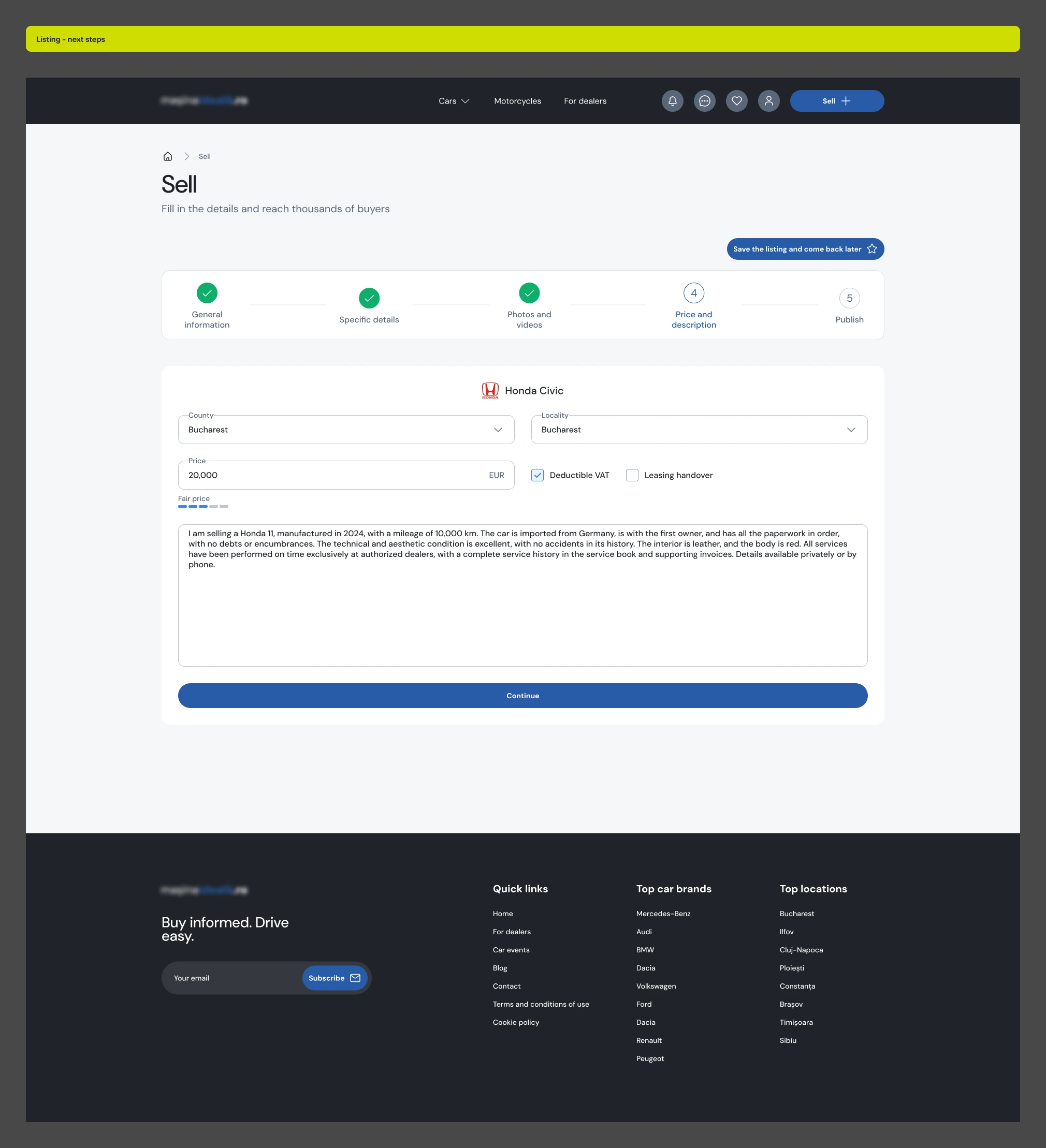
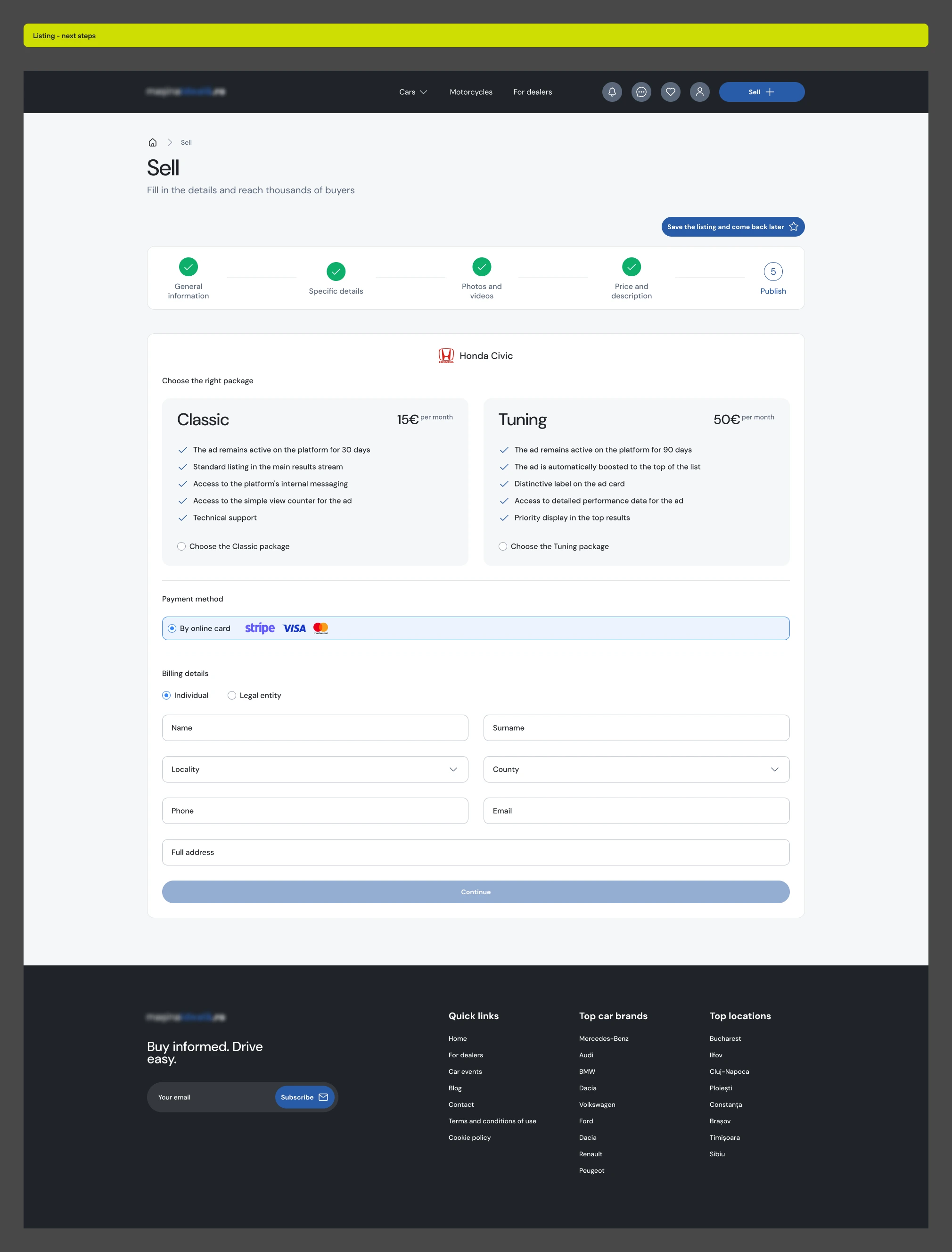
a listing flow that doesn't feel like filling in a government form. Guided, saveable, and fast, especially for the car data, which is where most people give up.
One decision I pushed on
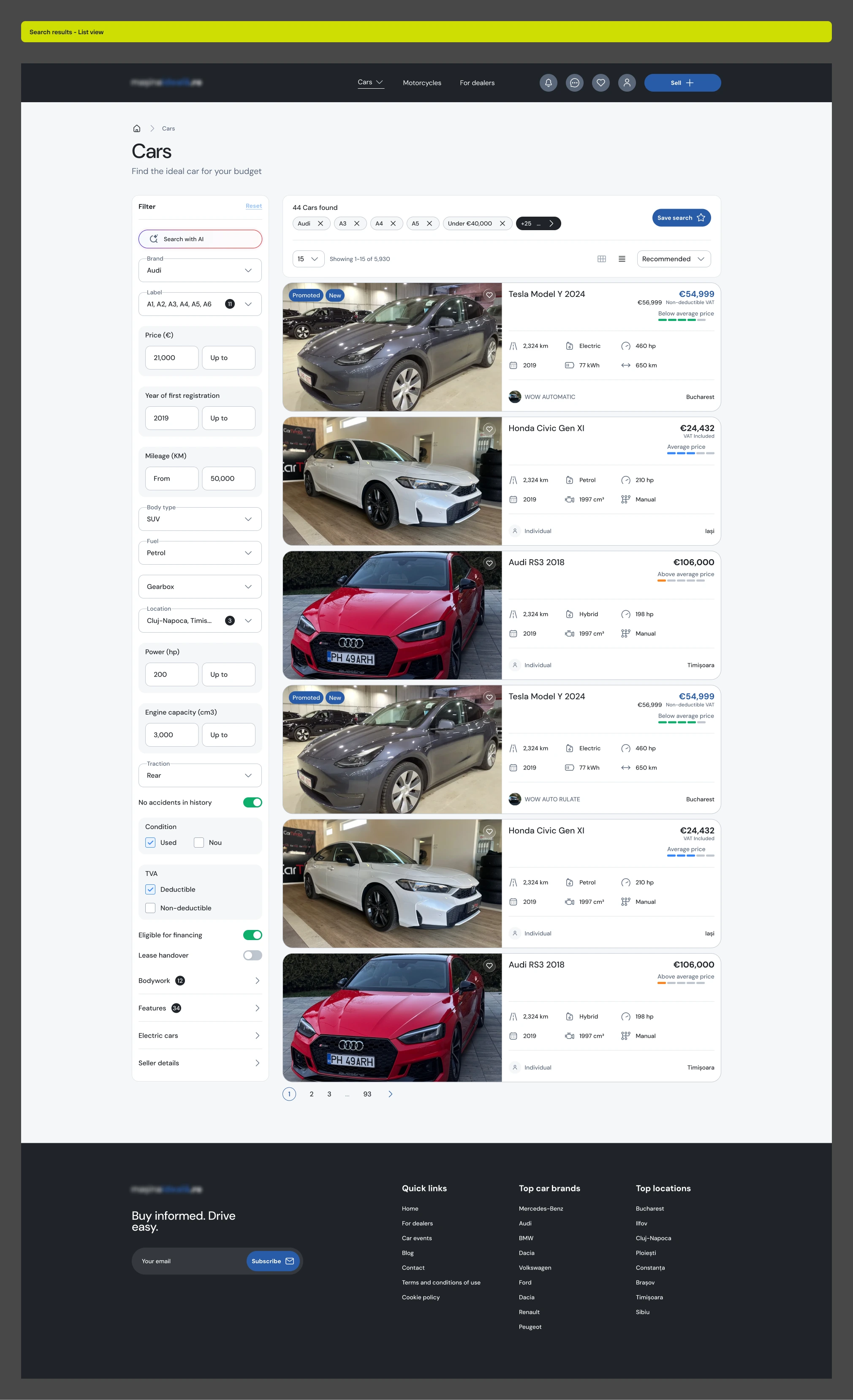
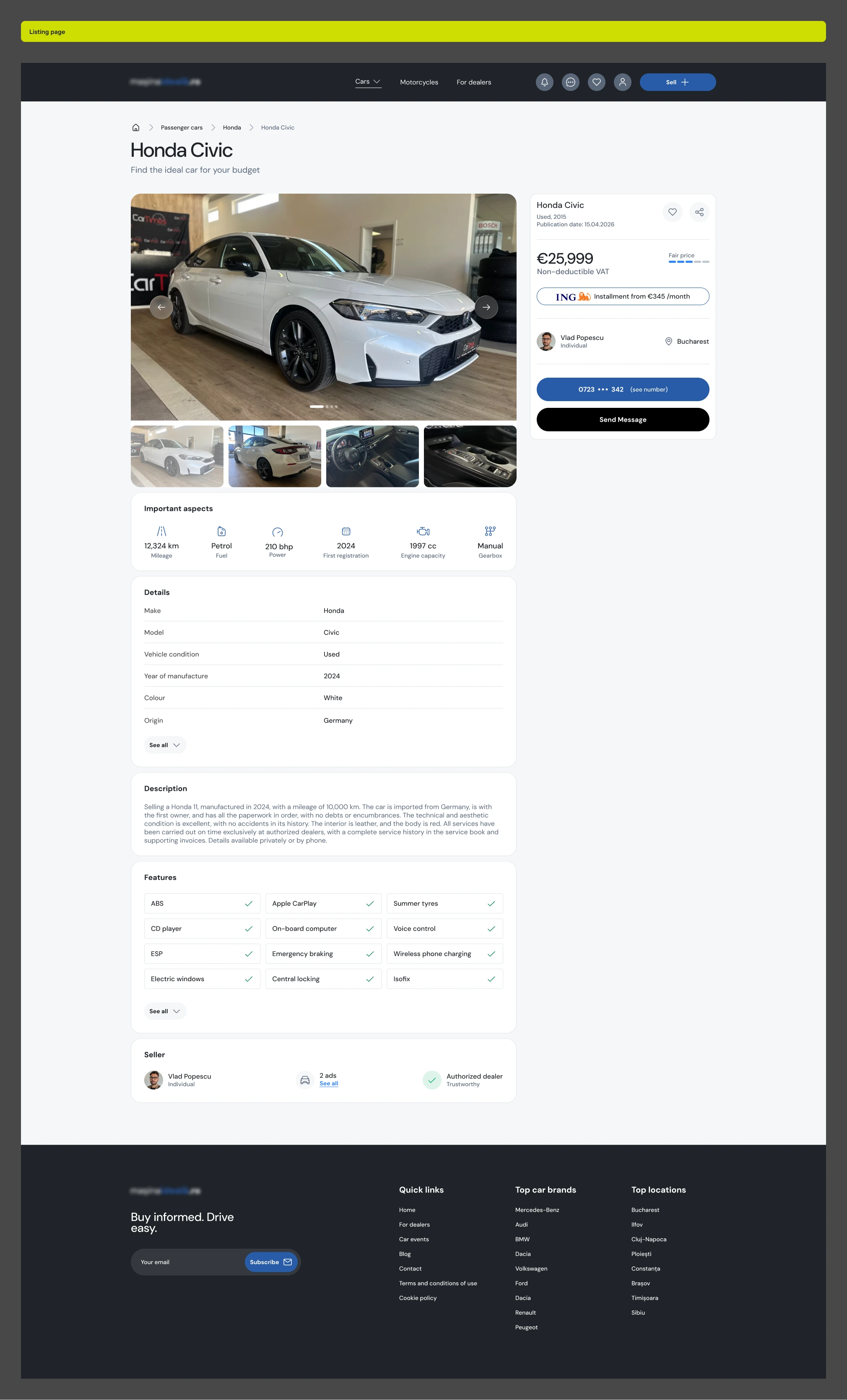
The client lacked a price positioning strategy. I recommended adding a price indicator (below, average, above average) based on comparable listings. It costs nothing to compute, builds buyer trust, motivates sellers, and is now a core feature on every listing card.
Before starting any design work, I put together a set of interview questions for two different groups of people: some who were currently selling a car on the competitor platform, and others who were actively searching for one.
One page, no way to save progress, and specifications nobody remembers off the top of their head. On the buyer side, filters that didn't go deep enough and prices nobody could judge as fair left people guessing on both ends of the deal.
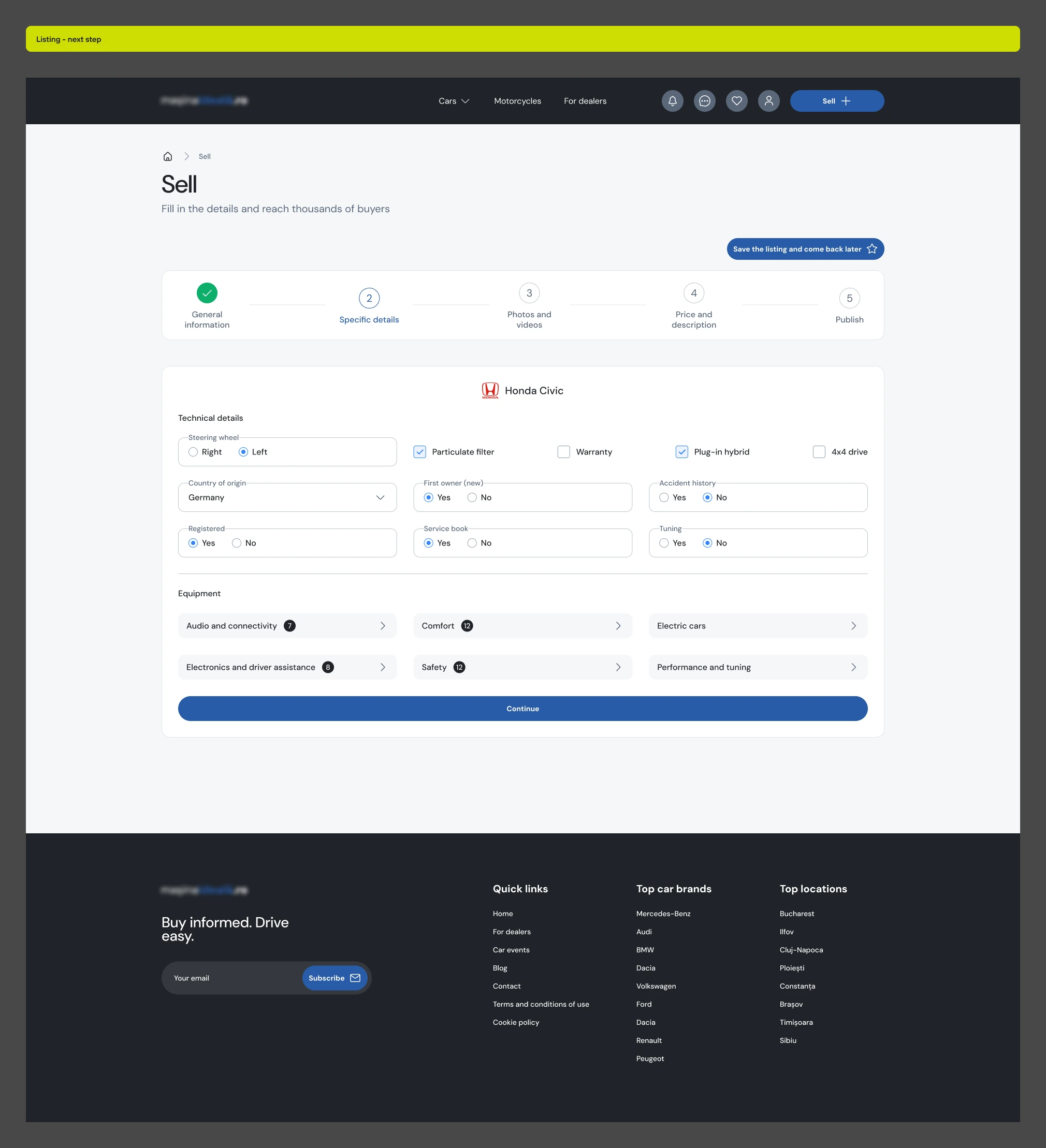
3 decisions came directly from these interviews: VIN lookup to pre-fill car data (solving a part of the 30-minute listing problem at the source), a multi-step form with save-and-resume (solving the abandon problem), and AI-powered natural language search (solving the "I don't know which filter to set" problem). The price indicator came from the 73% figure and it was the easiest sell to the client once I put it in front of them.
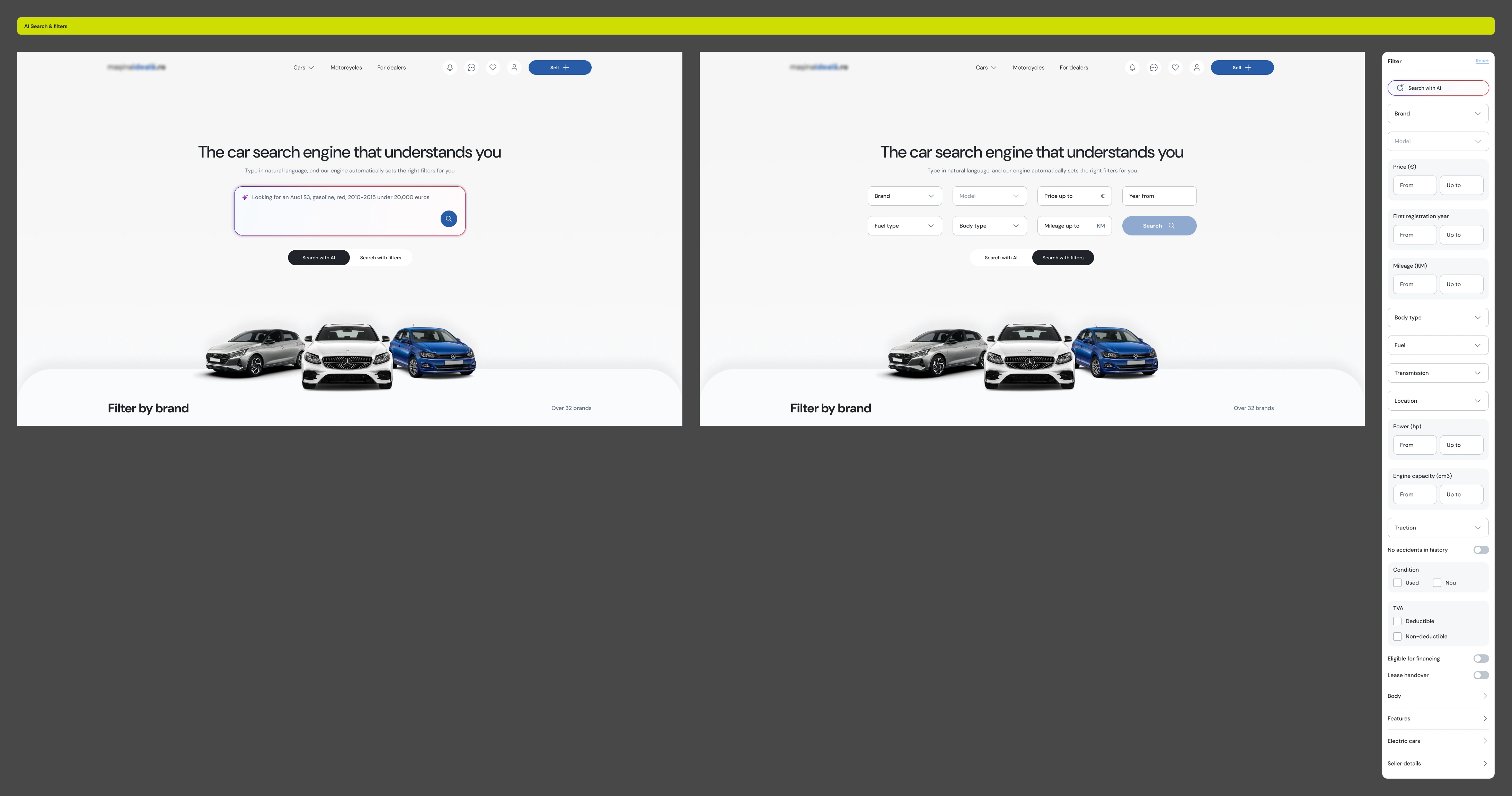
Get from "I want a car" to a shortlist worth looking at, whether the buyer knows exactly what they want or has no idea where to start.
Constraint
Most buyers can describe what they want in a sentence, but can't translate that into the right combination of filters. The competitor platform required them to know the jargon first.
Decision
Two search modes, equal in prominence: natural language (AI sets the filters automatically) and manual filters (for buyers who know exactly what they're after). Neither is treated as the "advanced" option.
Trade off
AI search adds technical complexity and occasional misinterpretation. Accepted! The cost of a wrong filter is one click to correct. The cost of someone giving up because they don't know which filter to use is a lost user.

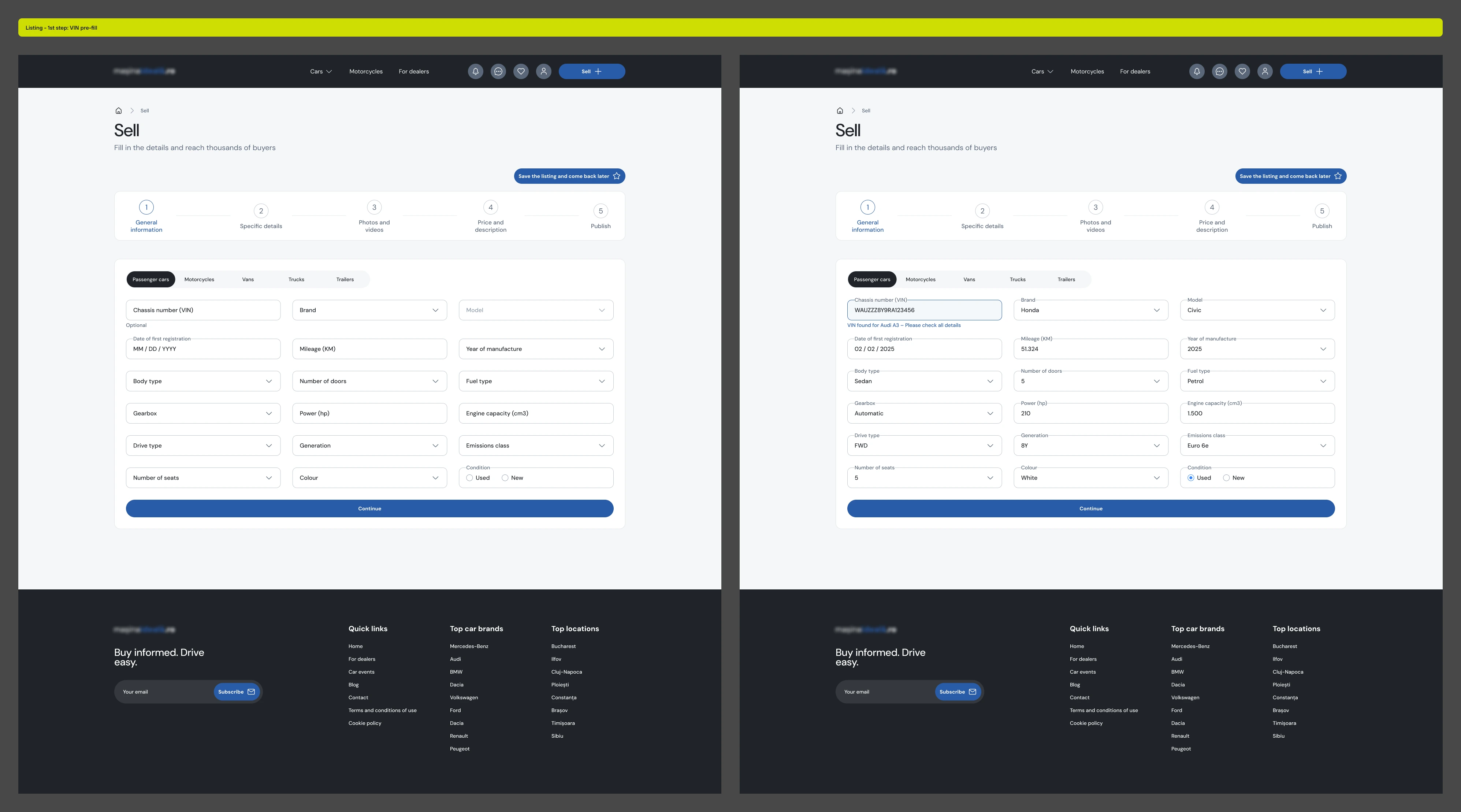
Get a car listed in under 20-25 minutes, even if the seller has never done it before and doesn't know their engine capacity off the top of their head.
Constraint
Car specifications are the hardest part of any listing. Most sellers don't know their exact engine capacity, trim level, or equipment list from memory. But competitors require all of it upfront, on one screen.
Decision
Ask for the VIN first. One field, one lookup, and the platform pre-fills everything it can: make, model, year, engine, gearbox, fuel type. The seller reviews and corrects, rather than starting from zero.
Trade off
VIN lookup isn't perfect. Older cars or import vehicles sometimes return incomplete data.
Track where sellers abandon the listing flow
The VIN lookup and save-and-resume were designed to solve the two biggest drop-off points. The first thing I'd check is whether they actually did.
Measure AI search accuracy
How often does a natural language query return results the buyer finds useful? How often do they immediately change a filter the AI set?
Watch the price indicator's effect on seller behaviour
Does real-time price feedback make sellers price more competitively? Does it make listings sell faster?
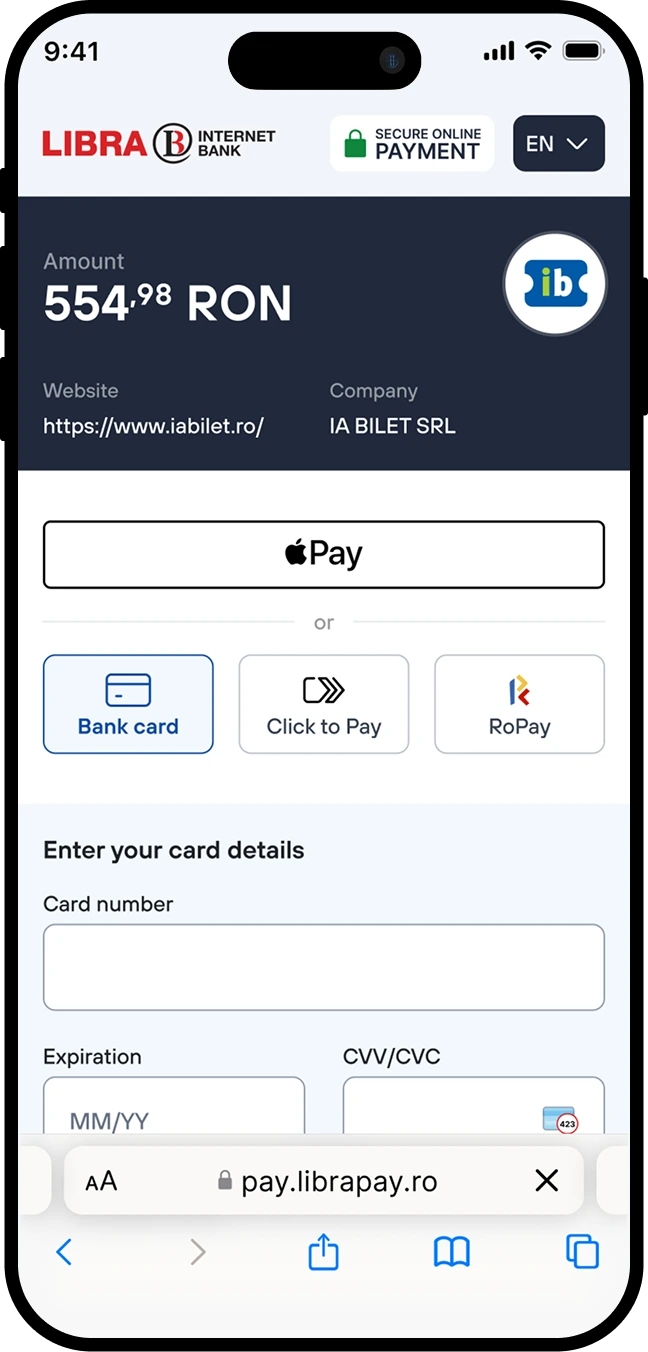
The payment processing page behind hundreds of merchant checkouts. Redesigned it for trust and speed across desktop and mobile, and added Apple Pay, Click to Pay, and RoPay.